


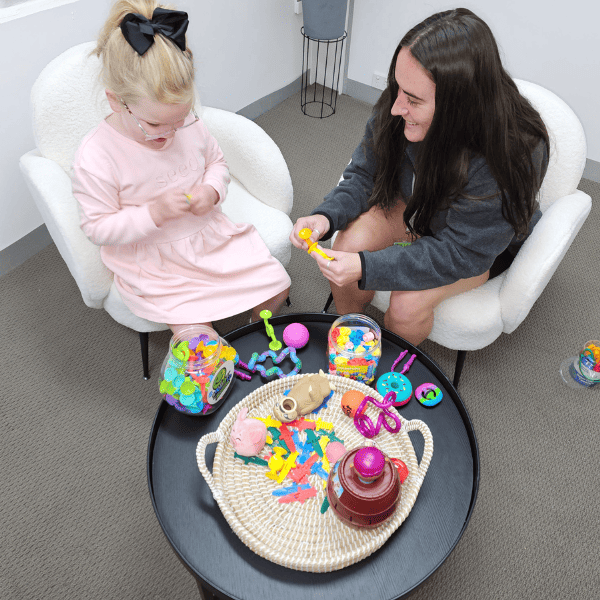

Play Therapy
Forbes Clinical Services is an NDIS Play Therapy service supporting children and young people with disabilities, developmental delays, and psychosocial challenges.
Our registered practitioners use evidence-based, play-based strategies that increase the participant’s quality of life and support them to express themselves meaningfully, build emotional regulation skills, and engage more confidently with family, peers, and community.
What Our Practitioners Do
We understand that the NDIS can be challenging for families to navigate. As a community-based service, we can provide high-quality play therapy in a variety of settings, including the participant’s home and school environments. We also offer the flexibility of telehealth sessions, where appropriate.
Our dedicated practitioners have a strong focus on providing person-centred support that builds rapport and offers unconditional positive regard. Our Play Therapists are trained in providing high-quality, evidence-based care, including assessments and interventions personalised to each child. Every client is considered holistically, with their individual needs, values, and communication style at the centre of the therapeutic process.
Specialist Support That Is Inclusive and Responsive
Working alongside Forbes Allied Services, we offer the benefit of a multidisciplinary approach. This gives participants and families the choice to allow practitioners within our organisation to collaborate and work cohesively, increasing the effectiveness of therapy and creating a more consistent experience across support services.
Our practitioners utilise a child-led, evidence-based approach that is family-centred and takes the participant’s developmental stage and individual needs into consideration. Sessions are structured to feel safe, predictable, and engaging, creating the conditions where real therapeutic growth can occur.
Our Clientele
Our practitioners support children and young people with a range of functional, emotional, and developmental challenges.
These include:
- Autism Spectrum Disorder (ASD)
- Developmental delays
- Anxiety, phobias, and selective mutism
- Attention Deficit Hyperactivity Disorder (ADHD)
- Trauma, grief, and loss
- Emotional dysregulation and behavioural challenges
- Social difficulties and difficulties with peer relationships
- Family change or disruption
- Attachment difficulties
- Communication and language delays
Our play therapy team is trained to work with a diverse range of clients to reach their goals and support them to live the life they deserve. We are trauma-informed and work hard to create a safe therapeutic relationship where every child feels heard, valued, and understood.
Sessions and Approaches We Offer
Our Play Therapists offer a range of therapeutic modalities and session types, including:
- Child-led non-directive play therapy
- Cognitive Behavioural Play Therapy (CBPT)
- Art and creative arts therapy techniques
- Narrative therapy through play
- Social skills and peer interaction groups
- Parent and carer coaching sessions
- Progress reports and NDIS goal-aligned outcome summaries
We accept referrals directly via our website and enquiries via our contact page.
You've got questions, we've got answers
?
Play Therapists have a broad scope of practice and are trained to support children and young people with emotional, social, behavioural, and developmental difficulties. Play is the natural language of childhood, a Play Therapist uses this language purposefully to help children process difficult experiences, build skills, and develop confidence.
This can extend from a young child struggling to express big emotions, to a school-aged child navigating social anxiety or trauma. A Play Therapist can also support children experiencing family change, hospitalisation, grief, or transitions that are affecting their day-to-day wellbeing.
No, and that’s one of the key strengths of play therapy. Children are not required to verbalise their feelings. Instead, they are given the space to express and work through experiences in the way that feels most natural to them, using toys, art, or imaginative play. The therapist guides and observes, creating meaning and progress without the pressure of conversation.
Assessments are shaped around each child’s individual presentation and referral goals. They typically explore emotional wellbeing, social functioning, play development, communication, and behaviour. Assessments are conducted in a relaxed, play-based environment so children feel comfortable, there is no right or wrong way to engage. The therapist then works with the family to develop a clear plan that aligns with the child’s NDIS goals or Medicare care plan objectives.
Children often present differently across environments. A child may appear settled at home but struggle to regulate emotions, engage with peers, or manage transitions at school or in the community. Play Therapy can help children build flexible coping strategies and social skills that carry across all environments, particularly in situations involving change, unfamiliar people, or heightened sensory or emotional demands.